

fabric Glossary
🧵 Fabric Glossary
Your Guide to Common Fabric Types
Discount Fabrics Lincs – The Resource Room
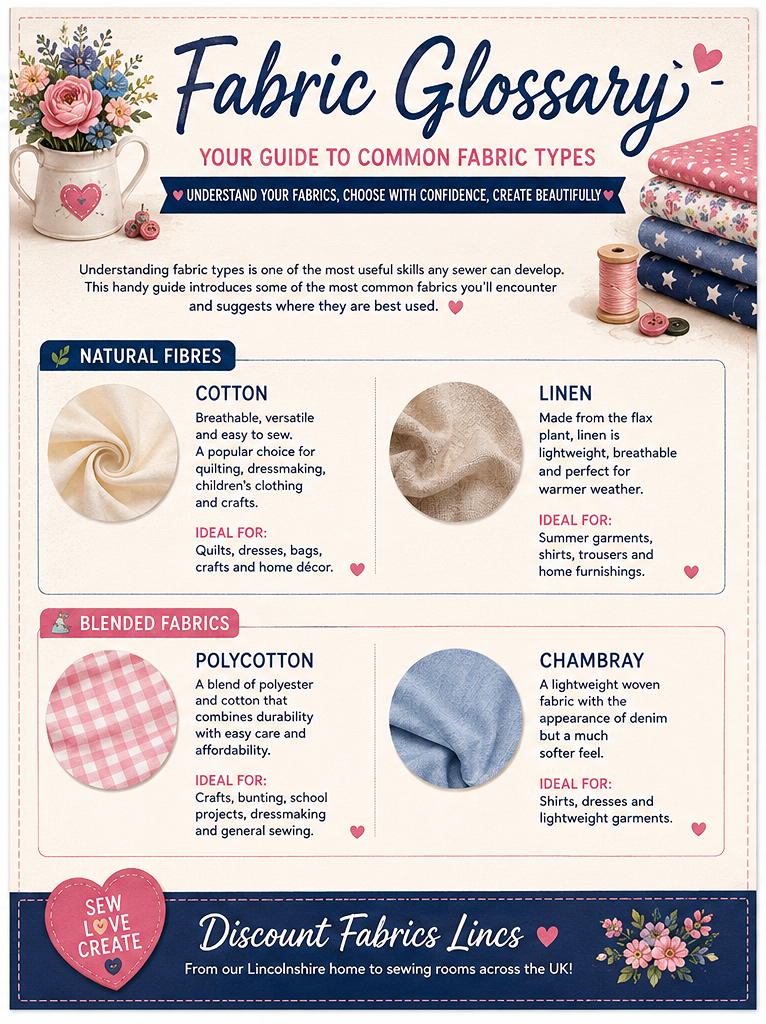
Understanding fabric types is one of the most useful skills any sewer can develop. This handy guide introduces some of the most common fabrics you'll encounter and suggests where they are best used.
🌿 Natural Fibres
Cotton
Breathable, versatile and easy to sew. A popular choice for quilting, dressmaking, children's clothing and crafts.
Ideal for: Quilts, dresses, bags, crafts and home décor.
Linen
Made from the flax plant, linen is lightweight, breathable and perfect for warmer weather.
Ideal for: Summer garments, shirts, trousers and home furnishings.
🧵 Blended Fabrics
Polycotton
A blend of polyester and cotton that combines durability with easy care and affordability.
Ideal for: Crafts, bunting, school projects, dressmaking and general sewing.
Chambray
A lightweight woven fabric with the appearance of denim but a much softer feel.
Ideal for: Shirts, dresses and lightweight garments.
👗 Dressmaking Fabrics
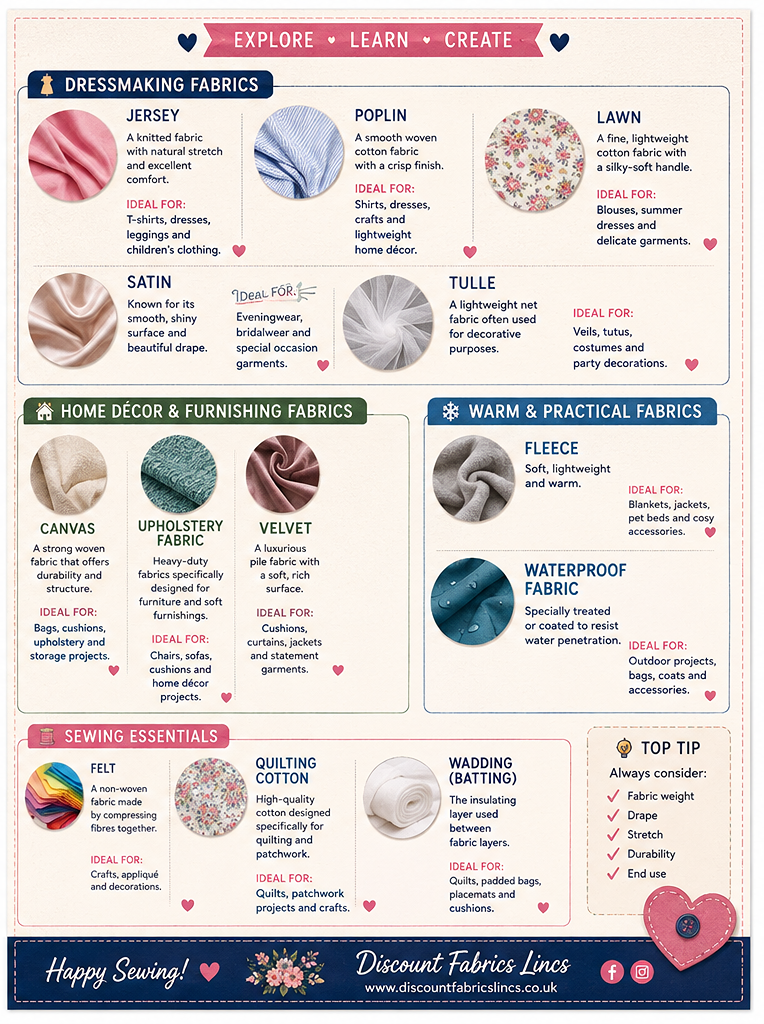
Jersey
A knitted fabric with natural stretch and excellent comfort.
Ideal for: T-shirts, dresses, leggings and children's clothing.
Poplin
A smooth woven cotton fabric with a crisp finish.
Ideal for: Shirts, dresses, crafts and lightweight home décor.
Lawn
A fine, lightweight cotton fabric with a silky-soft handle.
Ideal for: Blouses, summer dresses and delicate garments.
Satin
Known for its smooth, shiny surface and beautiful drape.
Ideal for: Eveningwear, bridalwear and special occasion garments.
Tulle
A lightweight net fabric often used for decorative purposes.
Ideal for: Veils, tutus, costumes and party decorations.
🏡 Home Décor & Furnishing Fabrics
Canvas
A strong woven fabric that offers durability and structure.
Ideal for: Bags, cushions, upholstery and storage projects.
Upholstery Fabric
Heavy-duty fabrics specifically designed for furniture and soft furnishings.
Ideal for: Chairs, sofas, cushions and home décor projects.
Velvet
A luxurious pile fabric with a soft, rich surface.
Ideal for: Cushions, curtains, jackets and statement garments.
Corduroy
A woven fabric with distinctive raised ribs that provide texture and warmth.
Ideal for: Trousers, jackets, skirts and cushions.
❄️ Warm & Practical Fabrics
Fleece
Soft, lightweight and warm.
Ideal for: Blankets, jackets, pet beds and cosy accessories.
Waterproof Fabric
Specially treated or coated to resist water penetration.
Ideal for: Outdoor projects, bags, coats and accessories. 🪡 Sewing Essentials
Felt
A non-woven fabric made by compressing fibres together.
Ideal for: Crafts, appliqué and decorations.
Quilting Cotton
High-quality cotton designed specifically for quilting and patchwork.
Ideal for: Quilts, patchwork projects and crafts.

12 Essential Sewing Tips for Better Results Every Time
Whether you're completely new to sewing or have years of experience, a few simple habits can make a huge difference to the quality of your finished projects. Here are some of our favourite sewing tips to help you achieve professional-looking results and enjoy your sewing even more.
1. Pre-Wash Your Fabric
Always pre-wash your fabric before starting a project. This helps remove any manufacturing finishes and reduces the risk of shrinkage or colour bleeding after your item has been made.
2. Press As You Go
Pressing your fabric and seams during construction creates a much neater finish. Taking a few extra minutes with the iron can make a dramatic difference to the appearance of your project.
3. Keep Scissors Sharp
Sharp fabric scissors make cutting easier, more accurate and safer. Reserve one pair of scissors exclusively for fabric and avoid using them on paper.
4. Pin Correctly
Insert pins perpendicular to the seam line rather than parallel. This helps hold fabric securely and makes pin removal easier while sewing.
5. Check Your Tension
If your stitches don't look right, test your machine tension on a scrap of fabric before continuing. Correct tension creates balanced, professional-looking stitches.
6. Measure Twice, Cut Once
Taking a little extra time to double-check measurements can prevent costly mistakes and wasted fabric.
7. Use the Right Needle
Different fabrics require different sewing machine needles. Choosing the correct needle helps prevent skipped stitches, fabric damage and uneven sewing.
8. Backstitch Securely
Backstitch at the beginning and end of seams to secure your stitching. Be careful not to overdo it, as excessive backstitching can cause lightweight fabrics to pucker or ruffle.
9. Notch and Clip Curves
Clipping and notching seam allowances on curved seams helps fabric lie flat and creates a smoother, more professional finish.
10. Organise Your Sewing Space
A tidy workspace saves time and reduces frustration. Keep your most-used tools, threads and notions within easy reach.
11. Take Your Time
Sewing isn't a race. Rushing often causes more mistakes than sewing slowly and carefully. Enjoy the process and build confidence with every project.
12. Practice Makes Progress
Every project teaches you something new. Don't be afraid to try new techniques, fabrics and patterns. Every stitch helps improve your skills.
Top Tip
Keep a sewing notebook containing successful needle types, stitch lengths, machine settings and fabric notes. This creates a valuable reference for future projects.
Remember
There is no such thing as a sewing mistake—just creative opportunities to learn and improve!
Happy Sewing from Discount Fabrics Lincs.


